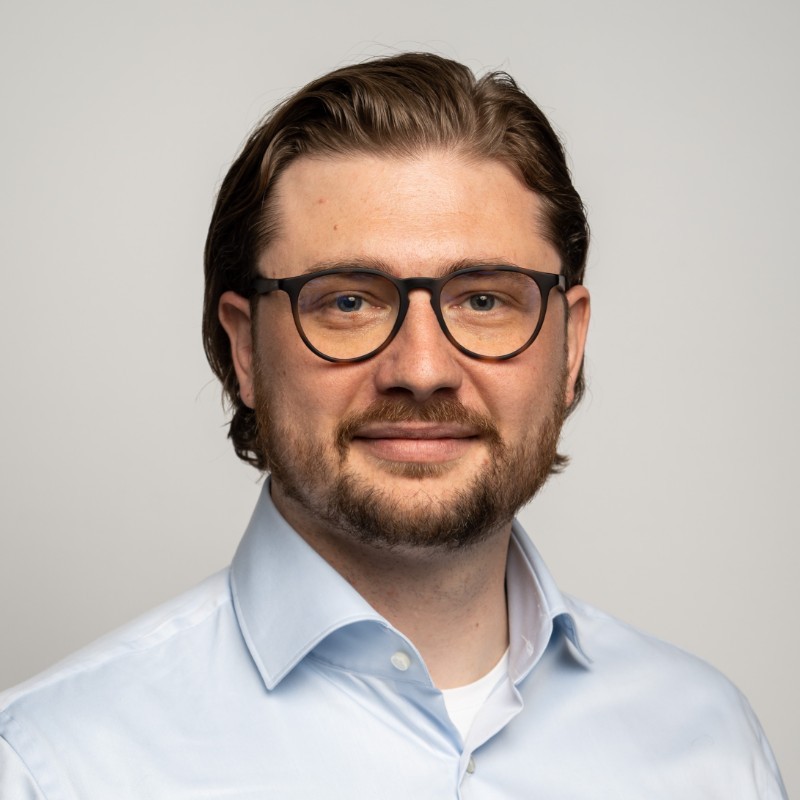
When Alex Filip launched his startup Zmei in Copenhagen, he was betting on a business idea, paired with navigating a new life chapter in a competitive and foreign ecosystem. Zmei is an IT consulting and software development company that builds digital solutions using Romanian engineering talent, while project management and product development are handled directly from Denmark.
“The inspiration for Zmei.eu came whilst I was working as an IT consultant,” Alex says. “I realized the growing need for IT professionals and the shrinking of IT-related educational seats. A 2021 analysis from IDA projects a shortfall of roughly 22,000 IT-educated professionals by 2030. That talent crunch will put all companies under pressure, especially smaller ones that can't afford the salaries or fees that larger companies can.”
The point that put the wheels in motion? A wave of layoffs in the US tech sector in 2023, which heavily impacted Romanian outsourcing providers. To Alex, this represented an opportunity: redirect skilled Romanian developers to Denmark, where demand was growing.
“After doing more market research and talking to other entrepreneurs, I decided to quit my job and went all in on the idea.”
Dealing with insecurity, alongside bureaucracy
Even after 14 years in Denmark and speaking passable Danish, Alex says his biggest challenge wasn’t regulation or paperwork.
“I was (and sometimes still am) my own biggest challenge, exactly because I am a non-Dane,” he admits. “I tend to be cautious in taking initiatives and decisions, because I do not feel totally comfortable in how to approach situations, businesses, and people.”
Still, he’s working on it.
“I try to engage with potential clients in Danish and put myself out there. I’ve learned that failure is part of the process.”
It's a vulnerability many internationals will recognize: that inner voice that questions whether you're "Danish enough" to lead, to sell, or to succeed.
Support Systems & Incubators
Denmark’s startup ecosystem turned out to be a surprising support network for Alex. Within three months of leaving his job, he joined AKA's Startup Program, Denmark’s largest startup incubator.
“It was the perfect bootcamp on how to start a business, and how to start a business in Denmark,” he says. “Everything was in Danish, but my cohort and the staff were really accommodating, even for non-native speakers like my former co-founder.”
Now he’s part of Copenhagen School of Entrepreneurship's incubator, where things are similar: international-friendly and full of knowledge-sharing.
“People from other startups are helpful and supportive. It really matters on the downer days every founder faces.”
Programs like these provide knowledge and access to industry peers, other people navigating the same highs and lows of entrepreneurship. For many, this kind of community is what keeps the dream alive.
Getting Zmei Off the Ground
Zmei is registered as an ApS (anpartsselskab). For Alex, setting it up was relatively smooth.
“I used a company to handle the registration and capital requirements. For a sole proprietorship, it’s even easier, you can do it online in a few days. Unless, of course, the government does a random manual check,” he laughs.
Still, navigating these formalities can be intimidating at first, especially when Danish isn’t your first language. Alex credits support platforms and local companies with making the process manageable.
The process also forced him to make his pitch better.
“To get into the incubators, I had to back my idea with data. It helped me see blind spots and made the concept stronger.”
Cultural Differences & Danish Efficiency
Having seen how things work back home, Alex appreciates Denmark's efficiency.
“Growing up, my parents had a business in Romania and were always buried in paperwork. I was surprised by how easy it is to run a company in Denmark. The level of digitalization here is something we might take for granted, but it simplifies everything.”
Beyond the paperwork, he Danish approach to business emphasizes trust, transparency, and flat structures, values that have shaped Zmei's own culture.
He recalls panicking about not reporting his mandatory employee insurance policy to the government, only to find out it wasn’t necessary.
“That level of trust translates into the business culture as well.”
Identity, Integration & Company Culture
Zmei isn’t just a Romanian company operating in Denmark.
“I want to build and nourish a Danish company culture in our Romanian offices,” says Alex. “That way, we align with our Danish clients but also foster trust, care, and safety within our team.”
His goal is not only to deliver value to clients but also to raise the bar for how remote tech teams can work across cultures.
The foundation of Zmei is built on a belief that Danish, Romanian, and European values are not only compatible, they’re fundamentally the same. “We often act like these cultures are very different, but when you really break it down, we’re driven by the same principles,” he explains. That’s also why Zmei’s website carries a .eu domain. From day one, Alex wanted the company to reflect a European identity, not just a Romanian-Danish collaboration.
“Take integrity, for instance. In Denmark, it's about trust and transparency, people take your word seriously. That’s exactly what I grew up with in Romania. My parents taught me the same thing: if you say you’ll do something, you do it., and you do it right (as in properly)”
He also draws connections between the two countries when it comes to innovation and adaptability. “Denmark is known for efficiency and smart design, so is Romania, especially in tech. We’re incredibly adaptive, because we’ve always had to find creative solutions to get things done.”
At the core of it all, he says, is excellence, a shared drive to do meaningful work, build trust, and create something lasting.
Advice for Aspiring Founders
“If you have an idea, believe in it, and do your research, go for it,” Alex says. “The Danish government is actively pushing for more SMEs. They even lowered the ApS capital requirement from 40,000 DKK to 20,000 DKK.”
His final advice? Talk to people.
“Share your idea with both Danes and internationals. You’ll get insights, meet interesting people, and stumble upon unexpected opportunities. That’s the magic of the ecosystem here.”
To learn more about Alex's company, visit zmei.eu.