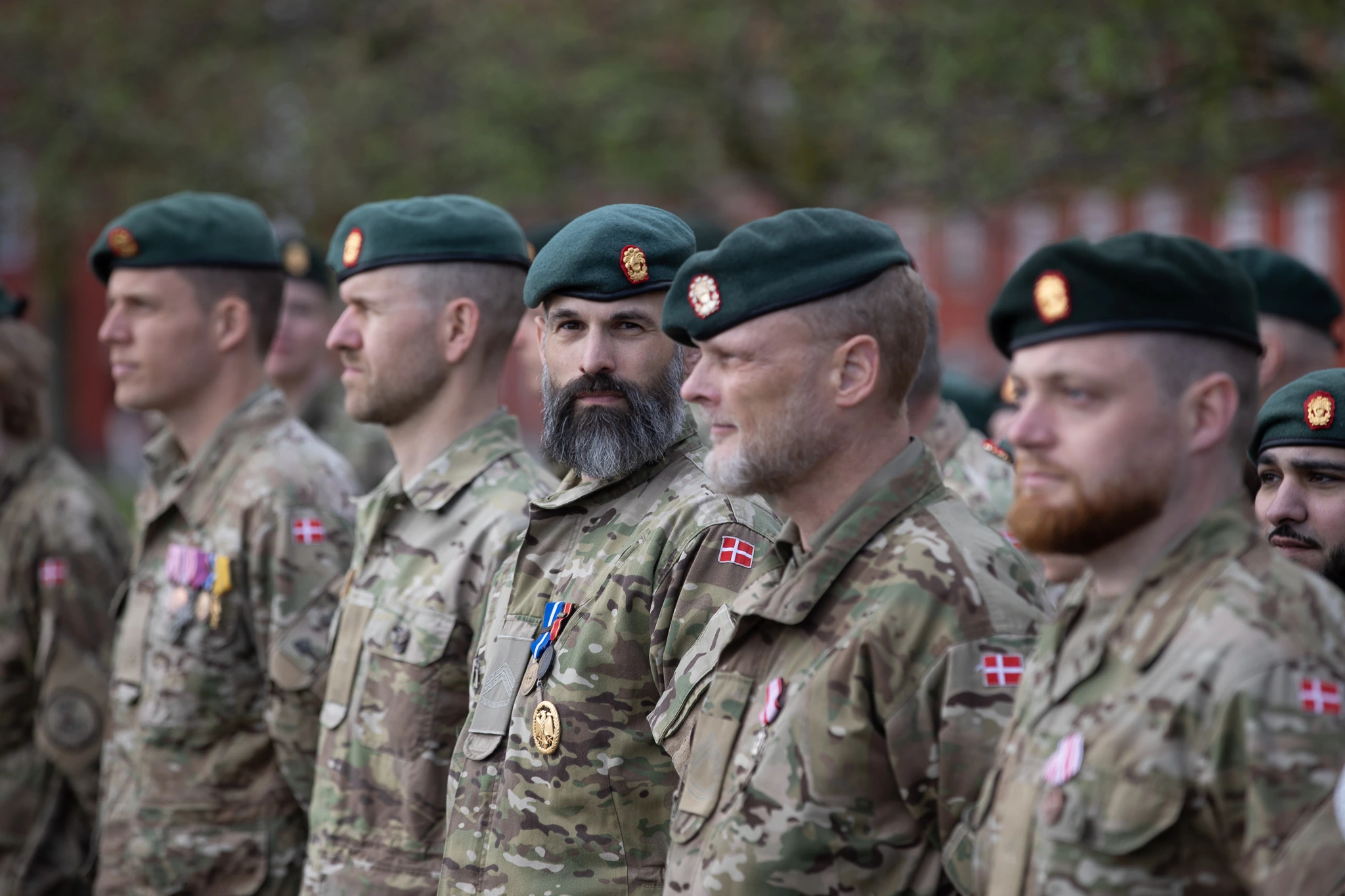
Have you ever felt the itch to do more for your community, but didn’t quite know how? Do you crave a sense of belonging, want to stay physically active, or maybe wish to meet more Danes outside of work? If so, the Hjemmeværnet, the Danish Home Guard, might be exactly what you’re looking for. Internationals are more than welcome to join, and you don’t even need to be a Danish citizen.
What is the Danish Home Guard?
The Danish Home Guard was born out of the resistance against Nazi occupation during World War II. It is deeply embedded in Denmark’s national DNA and the vow “Never again a 9th of April”, the date in 1940 when Germany invaded Denmark. That spirit gave birth to Hjemmeværnet in 1949 as a civilian force trained to act at a moment’s notice
Today, the Home Guard supports the Danish Armed Forces, police and other emergency services as well as other authorities in Denmark and abroad. It also plays a strategic role in NATO’s force deterrence and serves as a bridge between the military and civilian population in Denmark. Home Guard members come from all walks of life, united by one mission: to support Denmark’s defense and civil society. Today’s Home Guard is a modern organization of over 45,000 volunteers and its influence continues to grow at home and abroad.
Colonel Kim Willum H. Guldbech, Chief of the Resource Division, told Last Week in Denmark, “Our primary purpose is to support the Danish Armed Forces, our allies, and Danish society as a whole. In times of crisis or war, we guard and perform surveillance in the air, at sea, and on the ground, especially defending critical infrastructure and supporting NATO allies passing through Denmark. During floods or climate-related disasters, for instance, we assist emergency services by filling sandbags, delivering medicine and food, and evacuating affected civilians. That frees up resources for first responders to focus on urgent needs.”
What began as local defense units has grown into a coordinated, NATO-recognized force. From anti-aircraft patrols to airfield defense, to cybersecurity and counter-sabotage measures, the Home Guard plays a critical role in Denmark’s defense strategy. HJV has participated in joint exercises with Latvian, Lithuanian, and other allied Home Guard forces to strengthen Europe’s overall security.
Volunteers can choose to serve in one of the three main branches:
- The Army Home Guard
- The Navy Home Guard
- The Air Home Guard
These units help with everything from border control to cyber defense, maritime patrols, search-and-rescue, and crowd control at public events like the Copenhagen Marathon.
For Mads Vallentin Unger, a Danish volunteer with a military background, joining the Home Guard was a way to build on his existing experience:
“I joined during my time in the army to access new courses and special training,” he explains. “What surprised me most was discovering that the Home Guard does far more than traffic regulation. They play a key role in national operations, especially Search and Rescue, guard duty, and supporting the police.”
While his connection to Denmark remains unchanged, Mads hopes more people recognize the impact of the Home Guard’s work. “I wish more people understood how much the Home Guard contributes to local communities, especially how they supported other authorities during Covid,” he says.
“For many years, the Home Guard struggled with a poor public image,” Colonel Guldbech acknowledges.
“But we’re now seeing a cultural shift. After decades of declining membership, more Danes are recognizing the value of a volunteer military force. Membership is growing again, and that shows increasing appreciation for our role.”
Who Can Join?
Sergio Vela, a German citizen, is an international volunteer and Platoon Sergeant with the Home Guard. He found it easy to get clearance to join: “Internationals from NATO countries are generally welcome. I simply got confirmation from the German Ministry of Defence. It was a quick and smooth process,” he says.
Vela emphasizes the value internationals bring. “Diversity of thought, varied experience, and a broader worldview all strengthen the organisation,” he states.
The Home Guard is surprisingly open to internationals. Yes, even if you weren’t born in Denmark. To apply, you need to:
- Be at least 18 years old (there’s no upper age limit)
- Have lived in Denmark for at least 5 years and hold permanent residency
- Speak a basic level of Danish; enough to understand instructions and communicate during training. There’s no official language test or module, but your Danish will be assessed during the initial interview.
- Be willing to undergo background checks and commit to training
It doesn’t matter if you have no prior military experience. In fact, many recruits have civilian backgrounds.
“All residents who have had permanent residency in Denmark for five years or more are welcome,” says Colonel Guldbech. “We only require that volunteers understand Danish to a certain extent, as we don’t currently offer military education in English.”
Time, Training & What You Get
Once accepted, you’ll attend Home Guard Primary School in your spare time. Over the first year, you’ll receive instruction in:
- First aid and emergency response
- Basic shooting and weapons handling
- Protection against chemical/biological threats
- Crisis communication and leadership
If you’ve never done military service, you’re expected to complete around 250 hours of training over your first three years. After that, you’ll need to volunteer just 24 hours annually to remain active.
Sergio Vela notes how quickly the Home Guard can act: “When Børsen burned down in Copenhagen, HJV personnel were mobilised within hours to secure the area and support emergency responders.”
He also highlights routine collaboration: “As members of the Army Home Guard, we regularly train with the standing Danish Army and work with the Navy and Air Force branches in integrated operations.”
And while being a Home Guard member is unpaid, you do get compensation for any work hours missed due to missions or exercises. Uniforms, gear, and training are provided at no cost. The experience and training offered are also extensive. “We are investing in new vessels, vehicles, protection gear, and education,” Colonel Guldbech explains. “These investments are essential to ensure that our soldiers are ready for any crisis.”
Wider skills and benefits
Joining Hjemmeværnet isn’t just about drills and defense. It’s also a unique gateway to Danish culture and community.
“The world is unstable,” says Colonel Guldbech. “Joining the Home Guard gives you tools to prepare for whatever may come, and a chance to support your country and community.” He also emphasizes the value of skills gained: “You get access to education and experiences that are useful in both private and professional settings.”
For internationals who’ve struggled to meet Danes outside their workplace or university, this is a rare chance to build strong local bonds. You train side by side with people from your town, people who become teammates, mentors, and friends.
Many describe it as a “second family.” And for those worried about learning Danish, immersion in a shared mission makes the language barrier easier to overcome.
Sergio Vela’s motivation to join speaks to many internationals: “As an expat living in Denmark for over 10 years, I felt a strong urge to give back to the society I now call home. While this is not my birth country, I feel a personal responsibility to contribute to its security, especially in these more uncertain times.”
He also shares how it shaped his integration: “It gave me a crash-course in Danish language and culture. I’ve met people from all walks of life, doctors, IT professionals, lorry drivers, entrepreneurs. In uniform, we are all equals. That sense of camaraderie is something special.”
While many Danes once viewed the Home Guard as outdated, this perception is changing. “After decades of declining membership, we’re seeing renewed appreciation for what volunteers contribute,” says Colonel Guldbech. “There’s a growing awareness that Denmark must be able to defend itself, and more people are joining as a result.”
How to Apply
If you’re ready to take the leap, start here:
👉 Apply via hjemmevaernet.dk
The application includes:
- An online form
- A background check
- An interview with a local unit commander
- A health check
Be prepared for a few weeks of processing. Once accepted, you’ll be matched to a local unit and begin your basic training.
“Preparedness is at the core of what we offer,” says Colonel Guldbech. “You’re not only supporting your country, but also gaining skills and confidence for whatever life throws at you. It’s about resilience, personally, professionally, and nationally.”
In a world that often feels uncertain, there’s something reassuring about taking action, however small, for the place you now call home. Whether you’re looking for purpose, friendships, or personal challenge, Hjemmeværnet offers all three.
“Serving in the Home Guard isn’t just enjoyable, it’s a source of genuine pride. The tasks are meaningful, and the responsibility of leading soldiers only strengthens that feeling,” says Sergio Vela.
It’s not just about defending Denmark. It’s about becoming a part of it.